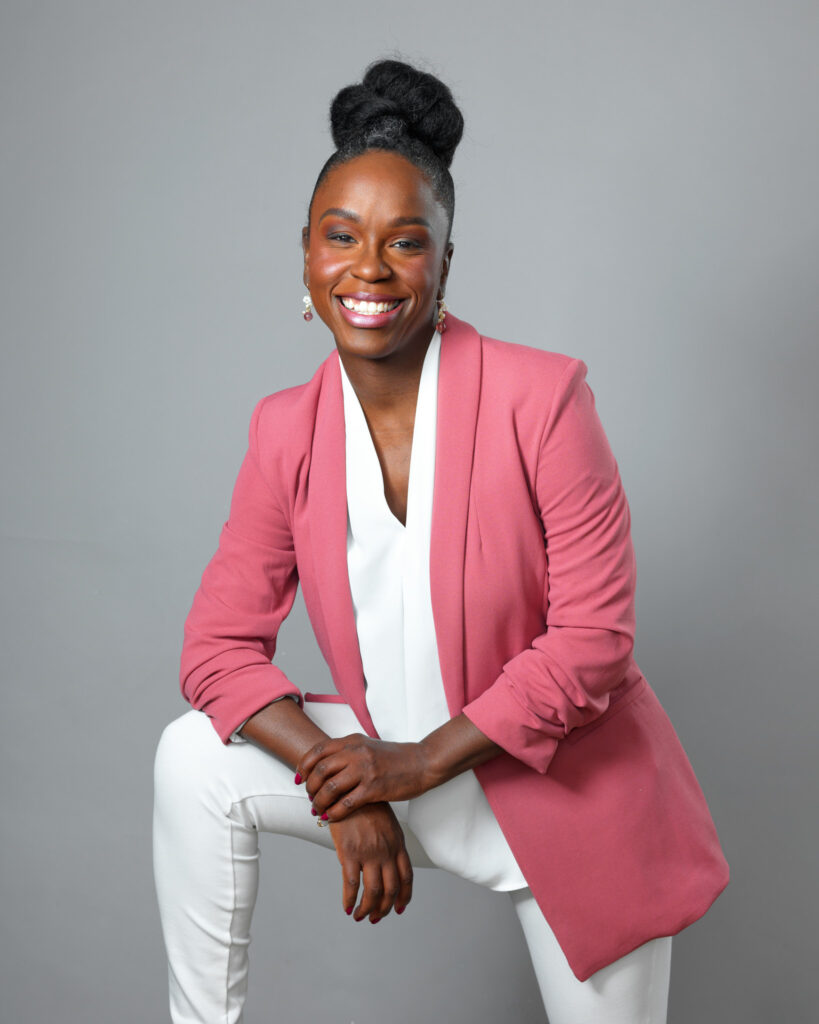
How to Become a More Resilient Nonprofit Leader

The nonprofit sector is changing at such an alarming rate, even those of us that do the work of social change day in and day out cannot keep abreast of all of the economic, political, and environmental trends affecting our field. In the midst of layoffs, program cuts, and fundraising concerns, most of us would rather stick our heads in the sand rather than face the fact that there’s no more business as usual. Most of us freak out in the face of change, even going so far as to change careers when the going gets too tough. Especially when it comes to Generation Y, we have to wonder whether our youthful passion for change gets overshadowed by the sheer and utter difficulty of the work we thought we so desperately wanted to do. I know my peers, and I have to admit that there is some truth to Baby Boomers’ complaints that we don’t stay in jobs very long. Where is our resilience? Merriam-Webster tells us that to be resilient means a: capable of withstanding shock without permanent deformation or rupture or b: tending to recover from or adjust easily to misfortune or change. In short, being resilient means that we have the ability to bounce back from crisis like an elastic rubber band. But how do we cultivate resilience when all day long we’re putting out one fire after another?

Learn From New Experiences

Maxine Dalton writes about the importance of developing strategies to learn how to adapt to changing circumstances. Our experiences with change can be either rewarding or unpleasant, but we can be intentional about how we react to them. Dalton suggests four key ways to prepare to deal with challenges and ultimately become more effective learners.

  1. Take Action: Try learning how to do a new task through trial and error versus research or a how-to book or class
  2. Think: Gather data about a new situation by reflecting on past experiences, imagining likely outcomes or scenarios of a possible decision
  3. Feel: Develop personal strategies for managing with your fear or discomfort that results in experiencing something new or unfamiliar
  4. Access Others: Seek advice or instruction from others who have been in a similar situation or use another person as a model or example for what you need to figure out

Develop a Spiritual Practice

No matter if you meditate or practice an organized religion, the crux of your spiritual practice can serve to make you stronger if it helps you to focus on your core purpose in life. I love how Oprah defines spirituality for herself and how it comforts her in times of uncertainty:

“When you begin to realize that you are more than your body, that your purpose is greater than your profession or your career—that every life, because you were born you have a right to be here and there is a calling on your life—it means you live your life without fear and you know that no matter what happens, no matter what happens, you are going to be all right. You are going to be all right. That’s what spirituality is for me.”

Fail Upward

Sometimes we think we have failed, when in fact all we’re doing is being true to ourselves. I remember when I heard the news that Darian Rodriguez had resigned as Executive Director of the Craigslist Foundation, I was sad. Until I heard that he was going to travel all around the world for six months. Talk about awesome. Most people don’t just up and go fly around the world, so undoubtedly that was something he had always wanted to do. Some might say that Darian gave up, that he failed because he left the organization – not so. There’s a big difference between failing and failing upward. When you fail upward, you give yourself permission to follow your joy, even if it means you’ll screw up every now and then. This month’s Oprah magazine quotes Robert Mack from his book, Happiness From the Inside Out: The Art and Science of Fulfillment:

“All great champions, most of whom are optimists, have become great because of-not in spite of-great adversity. Michael Jordan, a perennial optimist, once said, “I have missed more than 9,000 shots in my career. I have lost almost 300 games. On 26 occasions I have been entrusted to take the game’s winning shot…and missed. I have failed over and over and over again in my life. And that is why I succeed.’ If ever there was a case for optimism, this is it.”

Take a Vacation

Paul Schmitz, CEO of Public Allies talks about the importance of taking a vacation, even in the midst of the hectic pace of nonprofit work. Paul believes that taking time off helps him to be a stronger nonprofit CEO:

“I believe that the balance I try to strike makes me more effective. I have had some of my best insights and strategies emerge when I have been away from the office and unplugged from the day to day. And a good vacation brings me back energized and feeling excited to be back.”    

The inconvenient reality for nonprofit leaders is that there will be no going back to the “old days.” There will be no return to normality after the recession is over. We have to find ways to become better and stronger while we work with less resources and more demand.

The good news is that we have done this before, as Barbara Kingslover puts it so beautifully in High Tide in Tucson:

“Every one of us is called upon, probably many times, to start a new life. A frightening diagnosis, a marriage, a move, loss of a job. And onward full tilt we go, pitched and wrecked and absurdly resolute, driven in spite of everything to make good on a new shore. To be hopeful, to embrace one possibility after another – that is surely the basic instinct . . . Crying out: High tide! Time to move out into the glorious debris. Time to take this life for what it is.”

We must strive to become as resilient as possible if we are going to be able to strengthen our organizations in times of uncertainty. Our communities need the kind of leaders that will stay the course of social change, even after being knocked down and out. Even when the rules of the game change right before our very eyes. Even when the going gets so tough we just feel like giving up and going to work for corporate America.

How do YOU maintain your resilience and strength as a nonprofit leader?

Photo credit: wiosanna

Someone Stop the World

“Life is the experiencing of the experience.” – Sarah Susanka

One of my favorite R&B/soul artists is Maxwell, who just released BLACKsummers’night, a long-awaited album after taking an eight-year hiatus from the music scene. The first day it came out on iTunes, I snapped that baby up, and it’s been on repeat in my iPod ever since. One of my favorite songs on the new album is “Stop the World”, a song about being with the one you love while the world rages outside. The lyrics conjure up an image of a couple making the most of their moment together, ignoring whatever is going on around them. The message is so powerful for me – to be present in the moment, that the only time that really exists is Now. That’s been my theme song for the past week while I was on vacation in Hawaii with my boyfriend Jim. We relaxed on the beach on the beautiful island of Oahu, enjoying the sun and the sand and the salt on our faces.

About halfway through the week, I received my final grade from my first PhD class: a big fat C+. Despite earning “A” grades on all my papers, the rest of the coursework – SPSS, research jargon, weekly online discussions – didn’t come to me as easily as I had expected. I’ve never been a C+ student. Ever. I was crushed, but I knew why I didn’t do as well as I could have. I wasn’t willing able to sacrifice enough time to devote to the program like our professors had warned us. I still wanted to hang out with my friends, hit up the happy hours, and go on dates instead of studying constantly. There were times I fell asleep in the library or at 4am propped up in my bed with my laptop tangled up in the blankets after reading what seemed like a gazillion peer-reviewed articles.  It probably didn’t help that I also held down four part-time jobs in the process, which is way more flexible, but demands a ton of mental energy. Ordinarily, a C+ wouldn’t be so bad – in undergrad, you just average that sucker out with a few As and Bs. But with a PhD, you only have 2 chances to maintain a 3.0 GPA – meaning next semester I would have to earn an A- just to stay in the program. Instead of putting on additional pressure by killing myself to try to get perfect grades next time, I decided to do something that I have never done in an academic setting before. I hate to even write it down for you dear readers, but then I remember that one of the reasons I write is to find truth.

I quit. Well, not exactly. I took a leave of absence until next May, which is kind of like a deferral, since I won’t have to pay again. I have to thank all of you that sent me such sweet, encouraging messages and emails telling me I could succeed in this new educational journey. You were right to believe in me, but maybe what I learned in this first semester is that maybe I’m not yet ready to begin the journey. I love leadership studies, but maybe this is just my brain telling me an online degree program isn’t for me. Maybe I need to be in the classroom just like my students do, to ask questions and see the expression on my professor’s face when we both learn something from each other.

Or maybe I just need to take a page from my boy Maxwell’s book. When asked why it took him eight years to release his newest album, he said he just needed to “take time off.” All I know is that when I was supposed to be researching, all I wanted to do was have fun and blog and teach and be present. I just wanted someone to come and stop the world so I could look around for a minute. Hopefully by next May I will have figured out a way to reconfigure my life so I can hold it all and start school all over again – on the right foot this time. Right now I feel like I’m saying “no” to school so I can say “yes” to living my best life.

So what am I going to do now? What happens tomorrow, when I should have been starting my second PhD semester? I don’t know. I will probably not go back to working full-time, but read and write and watch all the movies in my Netflix queue instead. What do you do when you don’t know what to do next? I suppose you just be - until the right answer comes and sits down beside you. Because even when you face the potential of failure and take the leap off that cliff, you still have to figure out how to build your wings so you can make it all the way down.

For me, for now, there is still the fresh memory of that one afternoon on Oahu last week when the world stopped for me. We went to the North Shore of the island and it was just the mountains and the palm trees swaying in the wind with infinite possibility. I’m remembering blue-green waves crashing into white sea foam and flat gray rocks kissing the shore. I’m still thinking of the grit of sand in my hair, salt on my lips, and the sky – the sky a great blue wonder smiling down over everything.

Loading...
Sign up for blog updates and get a FREE chapter of my book, How to Become a Nonprofit Rockstar!